
WHY THIS MATTERS
According to OSHA, following proper Lockout/Tagout procedures prevents an estimated 120 fatalities and 50,000 injuries each year.
Managing hazardous energy is essential to prevent serious injuries at work. Lockout/Tagout (LOTO) is the standard procedure. However, OSHA provides a limited exemption for certain production activities, known as the Minor Servicing Exemption. Misunderstanding this exemption puts workers at risk.
According to the OSHA standards: “1910.147(a)(2)(ii) Normal production operations are not covered by this standard. Servicing and/or maintenance which takes place during normal production operations is covered by this standard only if;: 1910.147(a)(2)(ii)(A) An employee is required to remove or bypass a guard or other safety device; or 1910.147(a)(2)(ii)(B) An employee is required to place any part of his or her body into an area on a machine or piece of equipment where work is actually performed upon the material being processed (point of operation) or where an associated danger zone exists during a machine operating cycle.
Note: Exception to paragraph (a)(2)(ii): Minor tool changes and adjustments, and other minor servicing activities, which take place during normal production operations, are not covered by this standard if they are routine, repetitive, and integral to the use of the equipment for production, provided that the work is performed using alternative measures which provide effective protection.”
LOCKOUT/TAGOUT (LOTO): THE GOLD STANDARD FOR SAFETY
LOTO is required when employees are exposed to hazardous energy while performing activities such as:
- Maintenance.
- Repair.
- Setup.
- Cleaning or unjamming.
- Adjustments.
- Any activity that requires entering a danger zone.
LOTO means that:
- Equipment is isolated from all energy sources.
- Stored energy is relieved or restrained.
- Locks and tags prevent equipment activation.
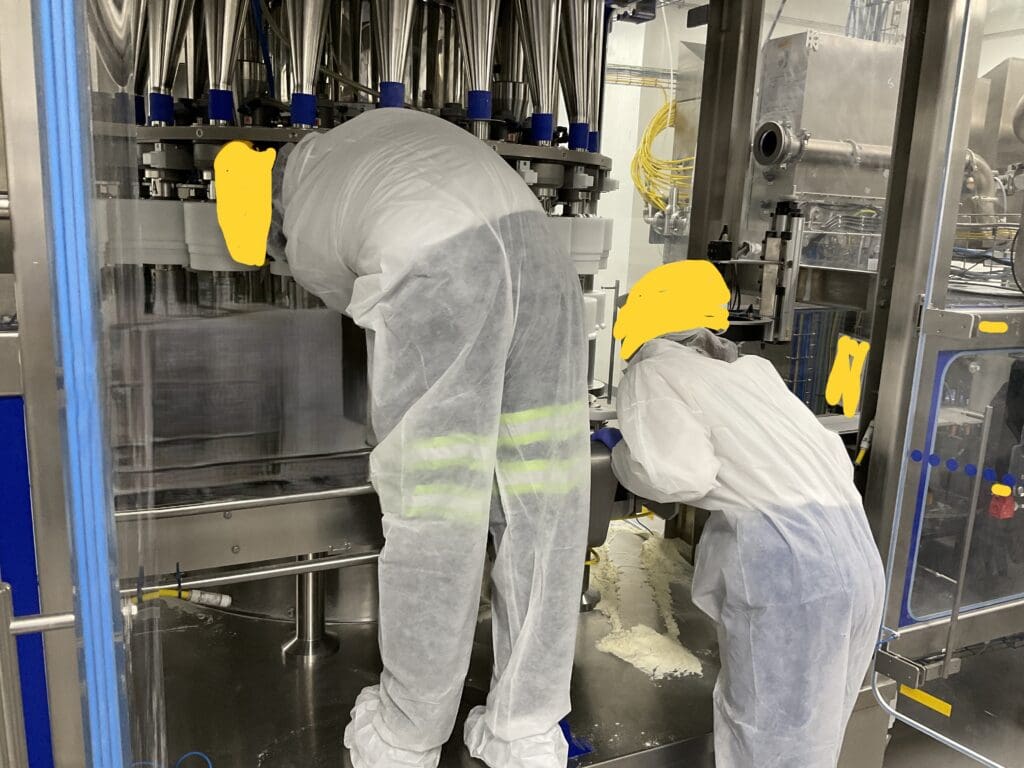
- If any part of the body enters a danger zone, LOTO is not optional—it is required.
I have seen many places throughout my travels where LOTO procedures are so outdated that they do not match the equipment or have not even been developed yet. Even though as stated in OSHA 1910.147(c)(1) “Energy control programMATTERS
According to OSHA, following proper Lockout/Tagout procedures prevents an estimated 120 fatalities and 50,000 injuries each year.
Managing hazardous energy is essential to prevent serious injuries at work. Lockout/Tagout (LOTO) is the standard procedure. However, OSHA provides a limited exemption for certain production activities, known as the Minor Servicing Exemption. Misunderstanding this exemption puts workers at risk.
According to the OSHA standards: “1910.147(a)(2)(ii) Normal production operations are not covered by this standard. Servicing and/or maintenance which takes place during normal production operations is covered by this standard only if;: 1910.147(a)(2)(ii)(A) An employee is required to remove or bypass a guard or other safety device; or 1910.147(a)(2)(ii)(B) An employee is required to place any part of his or her body into an area on a machine or piece of equipment where work is actually performed upon the material being processed (point of operation) or where an associated danger zone exists during a machine operating cycle.
Note: Exception to paragraph (a)(2)(ii): Minor tool changes and adjustments, and other minor servicing activities, which take place during normal production operations, are not covered by this standard if they are routine, repetitive, and integral to the use of the equipment for production, provided that the work is performed using alternative measures which provide effective protection.”
LOCKOUT/TAGOUT (LOTO): THE GOLD STANDARD FOR SAFETY
LOTO is required when employees are exposed to hazardous energy while performing activities such as:
- Maintenance.
- Repair.
- Setup.
- Cleaning or unjamming.
- Adjustments.
- Any activity that requires entering a danger zone.
LOTO means that:
- Equipment is isolated from all energy sources.
- Stored energy is relieved or restrained.
- Locks and tags prevent equipment activation.
- If any part of the body enters a danger zone, LOTO is not optional—it is required.
I have seen many places throughout my travels where LOTO procedures are so outdated that they do not match the equipment or have not even been developed yet. Even though, as stated in OSHA 1910.147(c)(1), “Energy control program. The employer shall establish a program consisting of energy control procedures, employee training and periodic inspections to ensure that before any employee performs any servicing or maintenance on a machine or equipment where the unexpected energizing, start up or release of stored energy could occur and cause injury, the machine or equipment shall be isolated from the energy source, and rendered inoperative.”
THE MINOR SERVICING EXEMPTION: A NARROW EXCEPTION
OSHA permits some activities to be done without full LOTO—but only if all conditions are met.
Activities that may qualify for the exemption must be:
- Routine.
- Repetitive.
- Integral to production.
- Fully protected by alternative means.
If any of these four requirements are not met, then the exemption does not apply.
Again OSHA states “ Note: Exception to paragraph (a)(2)(ii): Minor tool changes and adjustments, and other minor servicing activities, which take place during normal production operations, are not covered by this standard if they are routine, repetitive, and integral to the use of the equipment for production, provided that the work is performed using alternative measures which provide effective protection.”
WHAT THE MINOR SERVICING EXEMPTION DOESN’T ALLOW
Examples of activities that the exemption does NOT apply to include:
- Entering machine danger zones.
- Removing, opening, or bypassing guards.
- Placing any part of the body in locations where an unexpected startup could cause injury.
- Exposure to moving parts, stored energy, or pinch points.
- Servicing, repair, troubleshooting, or disassembly.
- Situations where engineering controls do not fully mitigate the hazard.
- If an unexpected startup could injure a worker, you must lock it out—period.
COMMON MISCONCEPTIONS
- “It only takes a second.”
- “We’ve always done it this way.”
- “The machine is off, so I’m safe.”
- “Production can’t stop for LOTO.”
SOME THINGS TO REMEMBER
- Accidents don’t happen in minutes. Serious injuries happen in seconds.
- Past habits are neither a legal defense nor a safe practice.
- The OFF switch does not isolate energy.
- Production slows more from injuries, investigations, shutdowns, and citations.
HOW TO DECIDE WHICH ONE APPLIES
Ask yourself:
- Is the task part of normal production work?
- Is it routine, repetitive, and performed the same way every time?
- Is the worker fully protected by machine safeguards?
- Does the worker avoid all exposure to hazardous energy?
- If the answer to ANY of these is NO, then full LOTO IS REQUIRED.
SAFETY TAKEAWAY
The Minor Servicing Exemption is helpful—but only when used correctly. LOTO is the default. The exemption is the rare exception.
Misusing it endangers workers from:
- Amputation.
- Crushing injuries.
- Electrocution.
- Fatalities.
- OSHA penalties.
- Equipment damage.
- Lost production time.
When LOTO is used consistently, everyone goes home safely.